Western North Carolina
CVOC and 1,4-Dioxane Groundwater Plume Control
Achievements:
Installed 150 TreeWell® units to control subsurface migration of a CVOC and 1,4-dioxane plume
Adapted species selection twice in response to field conditions while maintaining project momentum
Achieved hydraulic capture confirmed by hydrogeologic monitoring data
Managed a mid-project pest infestation with no lasting impact on system performance
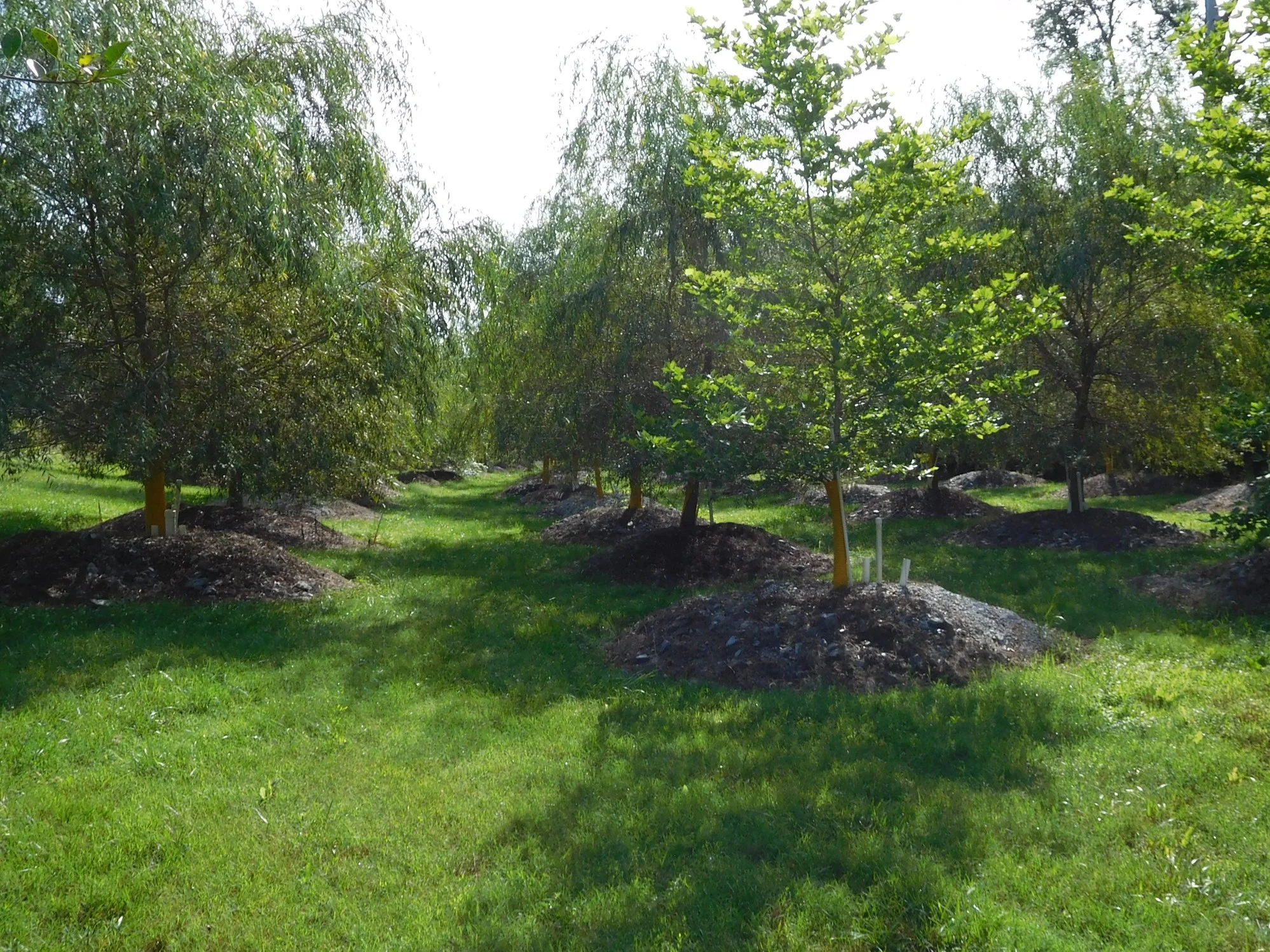
Matured tree canopy created secondary value for the property, providing shaded grazing and habitat for the family farm's animals
Objective: Evaluate the efficacy of phytoremediation for controlling the subsurface migration of chlorinated VOCs (CVOCs) and 1,4-dioxane in groundwater.
Site Conditions: Groundwater at the site is impacted with chlorinated VOCs and 1,4-dioxane to approximately 25 feet below ground surface (bgs).
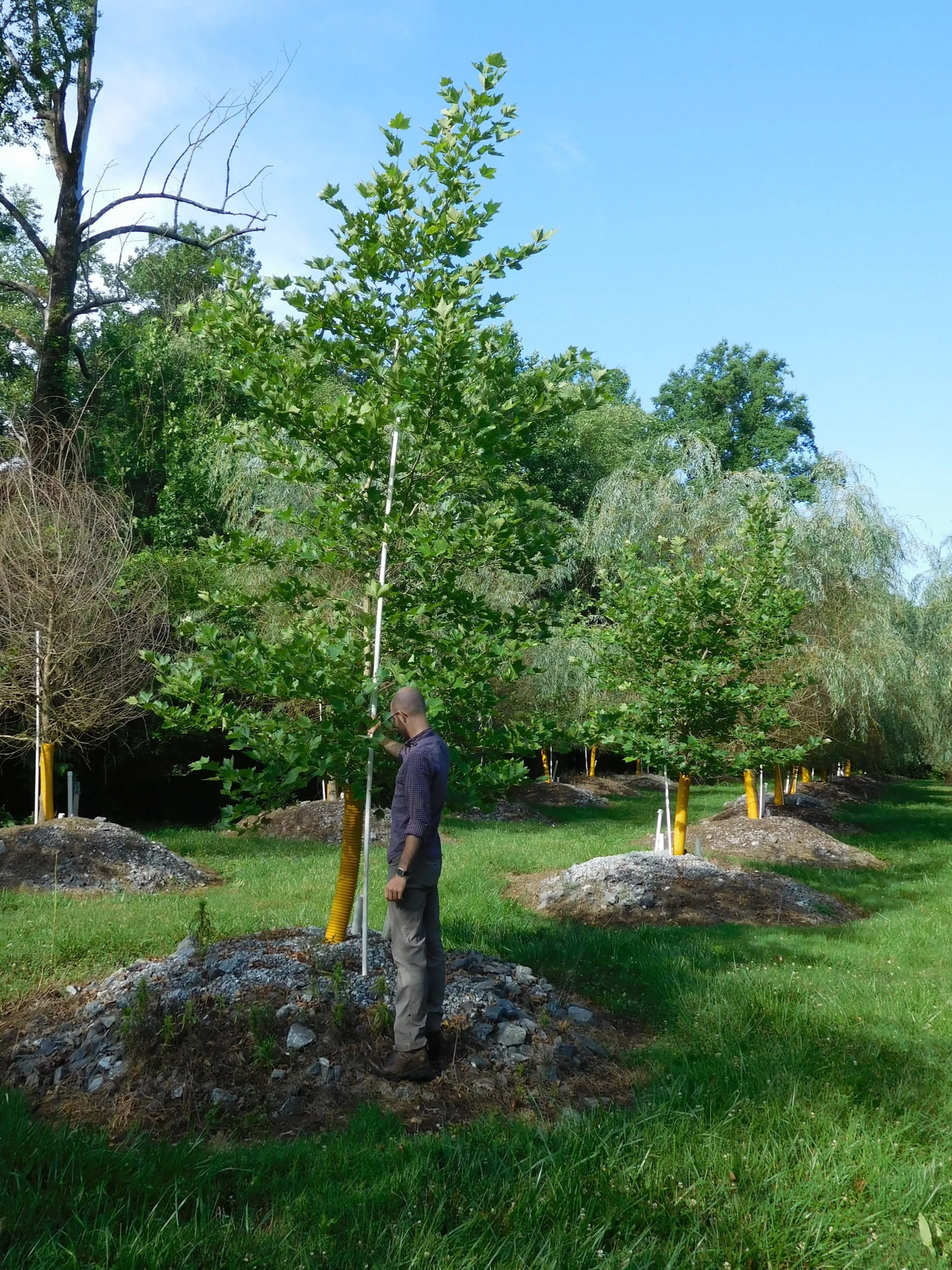
Implementation: 150 TreeWell® units were installed on 20-by-20-foot spacing to approximately 25 feet bgs in May 2015, planted with alternating willow, London plane, and tulip poplar trees. Nine piezometers were installed to support water-level monitoring via transducers, along with eight camera tubes to track root development.
Spring 2016: 42 willow and poplar trees were planted to replace the roughly 30% of poplar and London plane trees that had suffered mortality in fall 2015.
Spring 2017: An additional 10 willow and 6 river birch trees were planted to replace the remaining tulip poplars.
Results to Date:
Strong recovery after early mortality: The initial poplar and London plane losses were traced to improper storage and a planting delay caused by heavy rainfall. Tree growth and viability have been very good across the remainder of the study.
Pest management: A 2017 infestation of imported willow leaf beetles defoliated much of the willow canopy without affecting overall tree growth or vitality. Early detection in spring 2019 allowed for timely insecticide treatment, preventing further beetle damage.
Continued growth and hydraulic performance: Tree height and canopy have continued to increase across most units. Hydrogeologic monitoring data confirm the system is providing hydraulic capture and is on track to perform as designed.
Secondary Site Benefits
Beyond hydraulic containment, the maturing TreeWell® canopy has taken on a practical second life for the property's small family farm. As trees reached sufficient height and canopy spread, they began providing shaded grazing and habitat areas for the farm's animals, including chickens, guinea fowl, horses, and goats. A chicken coop and dog kennels were later constructed beneath the mature tree canopy, taking advantage of the shade the TreeWell® plantings now provide.
Co-Benefit Highlights:
Mature TreeWell® canopy provides shaded grazing and habitat for farm animals
Site supports chickens, guinea fowl, horses, and goats alongside active remediation
Chicken coop and dog kennels constructed under established tree shade