TreeWell® Technology
Delivering sustainable, nature-based alternatives capable of reaching deep aquifers and solving complex site challenges. From design through implementation and long-term monitoring, we provide complete remedial solutions.
Who we are
Applied Natural Sciences (ANS) is an SBA-certified woman-owned small business. Founded as an environmental remediation company in 1993, ANS specializes in phytoremediation — plant-based systems that address complex soil and groundwater contamination. Our patented TreeWell® technology is the only system of its kind, with a documented record of success at sites throughout North America and Europe.
TreeWell® systems have replaced mechanical pump-and-treat systems at multiple sites, helping those sites achieve regulatory closure with lower lifecycle costs than conventional mechanical remediation.
Using our PHYTO_INTEGRATED™ approach, TreeWell Systems can also be integrated with other remedial technologies — such as thermal-based remedies, enhanced bioremediation, in-situ chemical reduction (ISCR), ion exchange resins, or granular activated carbon — to capitalize on synergies between technologies and deliver more cost-effective, site-specific solutions.
What is a TreeWell® System?
A TreeWell® System is a plant-based remediation alternative that can deliver contaminant mass reduction and hydraulic control. This technology can access deep groundwater and bedrock aquifers beyond the reach of traditional phytoremediation, while promoting in-situ microbial degradation of subsurface contaminants. And unlike conventional treatment systems, it does this with a low-profile, aesthetically pleasing footprint.
What are the Benefits of Our Patented TreeWell® Remediation Systems?
-
On average, the lifetime cost of our remediation system is substantially lower than conventional remedies such as groundwater pump-and-treat systems.
-
Our systems have been successfully used to provide contaminant degradation in soil and groundwater under a variety of lithologic conditions. Additionally, our systems can be used to provide hydraulic control of groundwater, thereby mitigating plume migration.
Treatable contaminants include soluble compounds in soil and groundwater, including most VOCs, agricultural inorganics, solubilized metals, PFOA/PFAS, and semi-volatile organics.
-
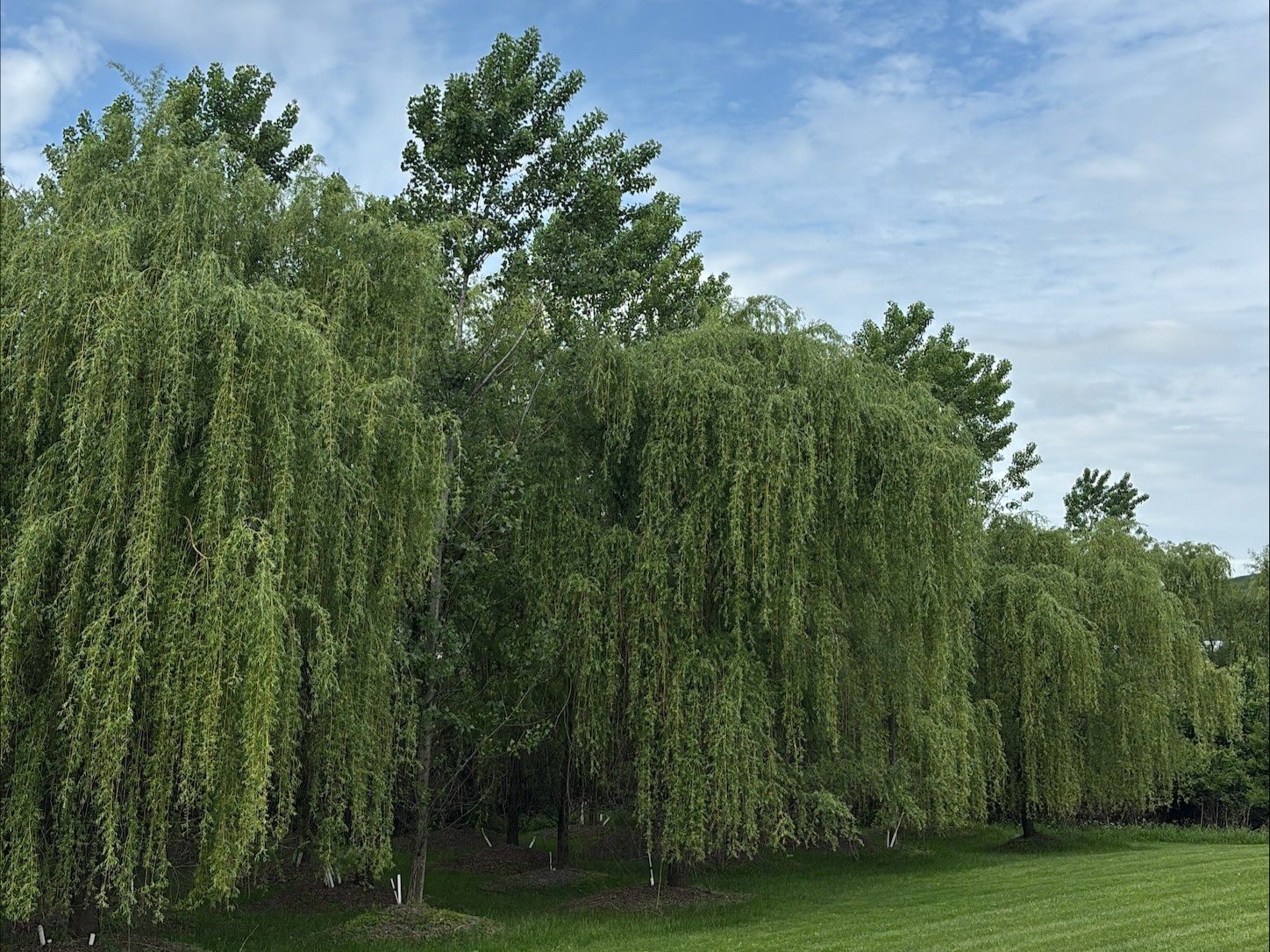
While significant remediation is taking place in the subsurface, the foliage of beautiful trees is growing above the surface.
-
As the trees mature, their groundwater uptake rates increase, providing improved hydraulic control and contaminant mass removal. Also, the root system typically hosts robust microbial populations that are capable of degrading many contaminants.
-
Founded in 1993, Applied Natural Sciences (ANS) delivers its proprietary TreeWell® system worldwide, with more than 3,500 units installed across North America and Europe. ANS’ nature-based technology has demonstrated proven effectiveness in groundwater remediation and hydraulic control at over 100 sites. These projects demonstrate applicability across diverse contaminant classes and a wide range of facility types, including legacy wood-treating operations, chemical manufacturing, electronics manufacturing, and explosives manufacturing facilities.
TreeWell® System Installation
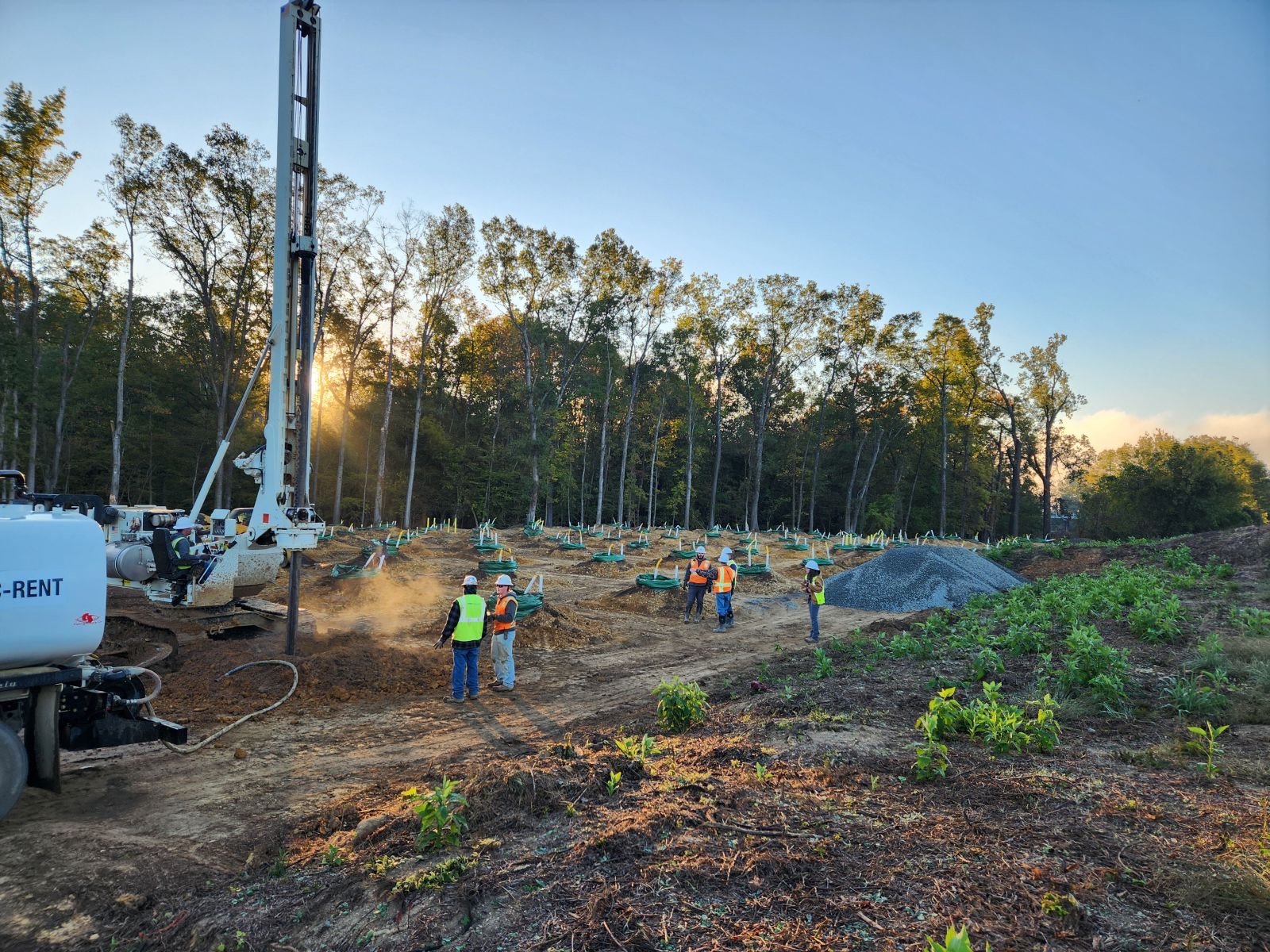
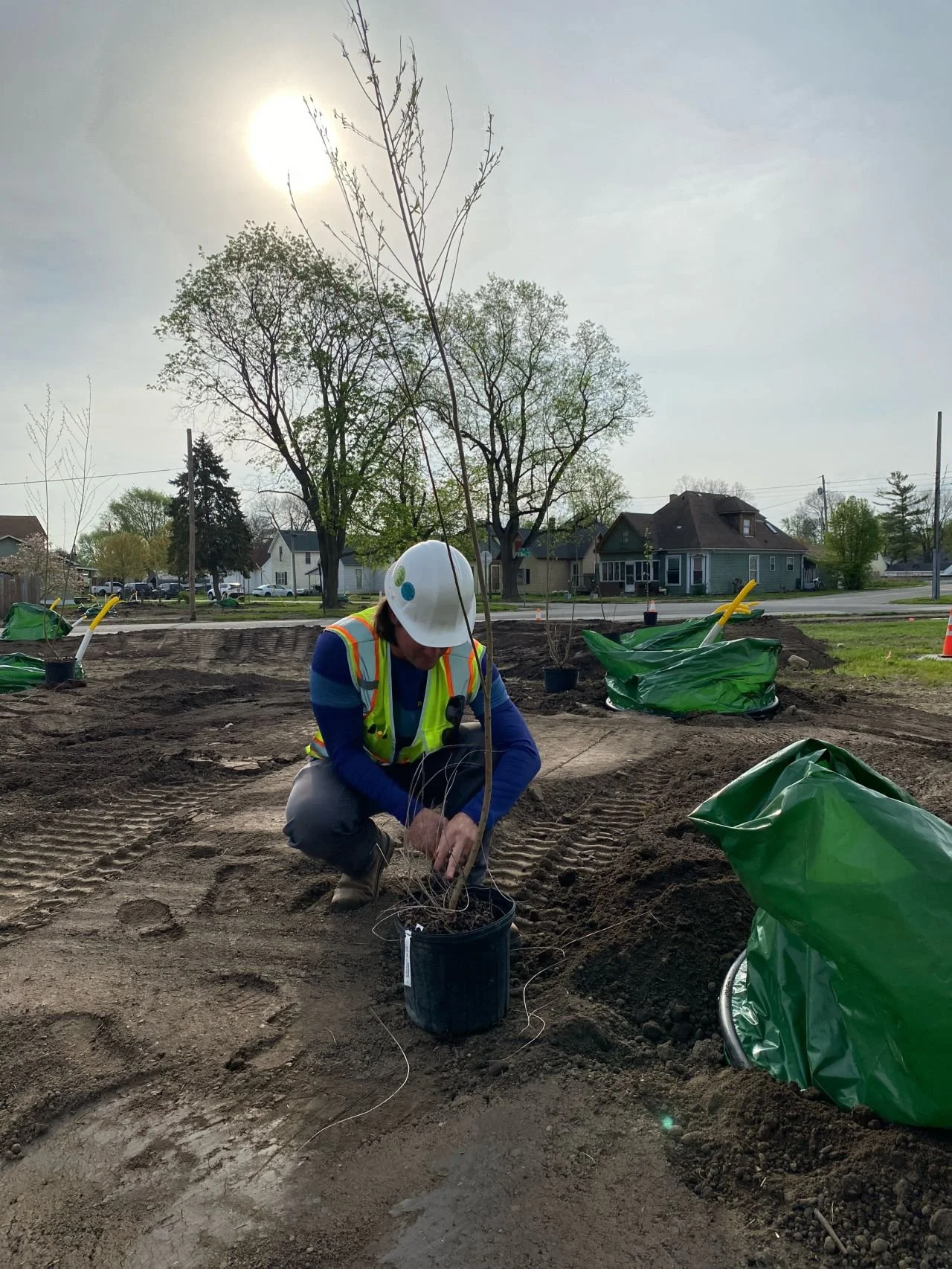
A TreeWell System is installed by excavating a large-diameter borehole, placing a Root_Sleeve™ liner to a depth targeting the contaminated groundwater zone, and backfilling with amended soil. This amended soil column and its native microbial populations reduce phytotoxic effects on the tree. The Root_Sleeve liner prevents the consumption of shallow percolating precipitation and allows precise targeting of specific water-bearing strata.
Once established, the tree and its root-zone microbial community work together to remediate the site.
How do TreeWell® units work?
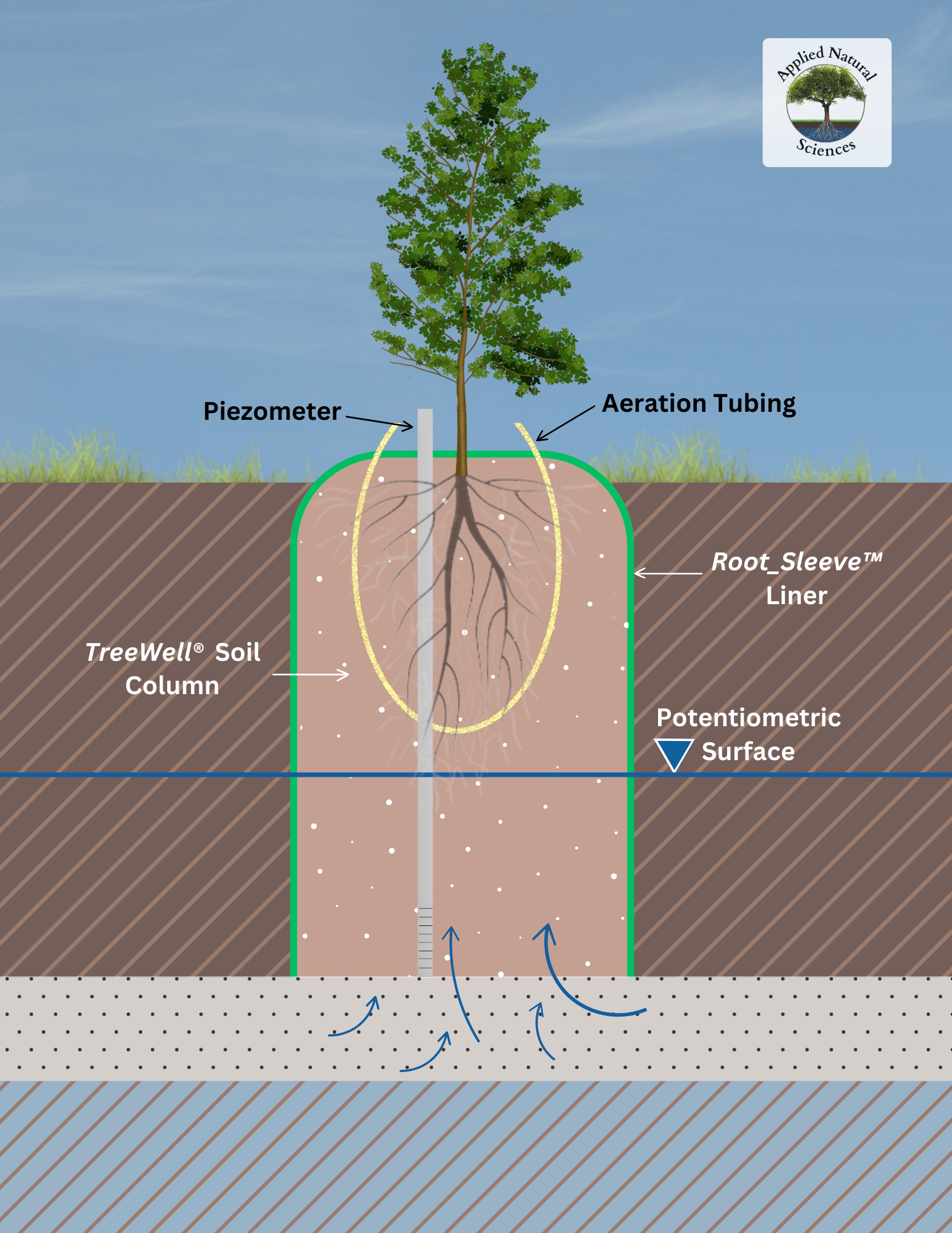
The TreeWell tree works in partnership with its root-zone microbial community to remediate the site:
The tree acts as a natural pump, drawing groundwater upward through the amended soil column (hydraulic uptake)
Tree root exudates — sugars and organic compounds released into the soil — stimulate and sustain the native microbial community, encouraging the biodegradation of contaminants in the root zone
This soil column functions as a bioreactor, where the resulting microbial activity degrades contaminants largely before they reach the tree's roots
Any residual contaminants are degraded within the plant, sequestered in plant tissue, or transpired into the atmosphere
Because the tree continuously consumes groundwater, it can also alter local flow direction — helping control or redirect a migrating contaminant plume
For contamination at extreme depths, the Straw TreeWell System offers an advanced solution.
Other FAQs About TreeWell® Systems
-
TreeWell systems can access deep groundwater and bedrock aquifers, with depth capability depending on system design:
Standard TreeWell units generally reach groundwater up to 20 ft bgs without irrigation
With strategic temporary supplemental irrigation, standard units can access groundwater to 35-40 ft bgs
A Straw TreeWell System — a closed-bottom variant of the standard unit — can address contaminated groundwater exceeding 100 ft bgs, when head pressure in the target stratum is sufficient to move groundwater up to the unit's upper screen
This depth range is achieved through soil texture engineered for sufficient capillary rise, allowing selected fast-growing tree species to reach the targeted groundwater zone within a single growing season.
-
TreeWell systems have successfully treated a wide range of contaminants, including:
Volatile organic compounds (VOCs) and semi-volatile organic compounds (SVOCs), including 1,4-dioxane
Pesticides and petroleum hydrocarbons
Agricultural inorganics, including nitrates, ammonium, and phosphorous
Tritium
Solubilized metals, including lead, arsenic, zinc, boron, and cadmium — commonly encountered at sites such as those impacted by coal combustion residuals (CCRs)
ANS is also currently running pilot-scale studies evaluating the fate, transport, and remediation potential of TreeWell systems for PFAS compounds.
-
Most targeted organic contaminants are degraded in situ by the microbial community within the TreeWell soil column — the same microbial activity sustained by the tree's root exudates. When this degradation happens in the soil before contaminants reach the tree in significant concentrations, the tree itself does not accumulate hazardous levels of contaminants and will not need to be disposed of as hazardous waste in the future.
Less commonly, some contaminants are taken up into the tree, where they are degraded or metabolized within plant tissue, sequestered in tissue, or transpired into the atmosphere.
-
Most commonly, various willows (Salix species) and poplars (Populus species) — including hybrid poplar cultivars selected for phytoremediation — are planted in TreeWell units. These species are favored for their fast growth rate, aggressive rooting, high water consumption, and an established base of phytoremediation research supporting their use.
Species diversity can help manage site-specific unknowns — various stressors that can affect tree health — so we also draw from a broader list of high-biomass, high-water-consumption tree species (such as sycamore, birch, and locust) selected and tailored to each site's specific conditions.
Learn more
Are you interested in learning a bit more about phytoremediation and how it can provide a cost-effective, sustainable, nature-based remedial alternative for your sites? Check out this informative webinar to learn how an engineered phytoremediation system can be designed to address complex and challenging sites.