Central Indiana
Performance below ground, beauty above.
Project Background
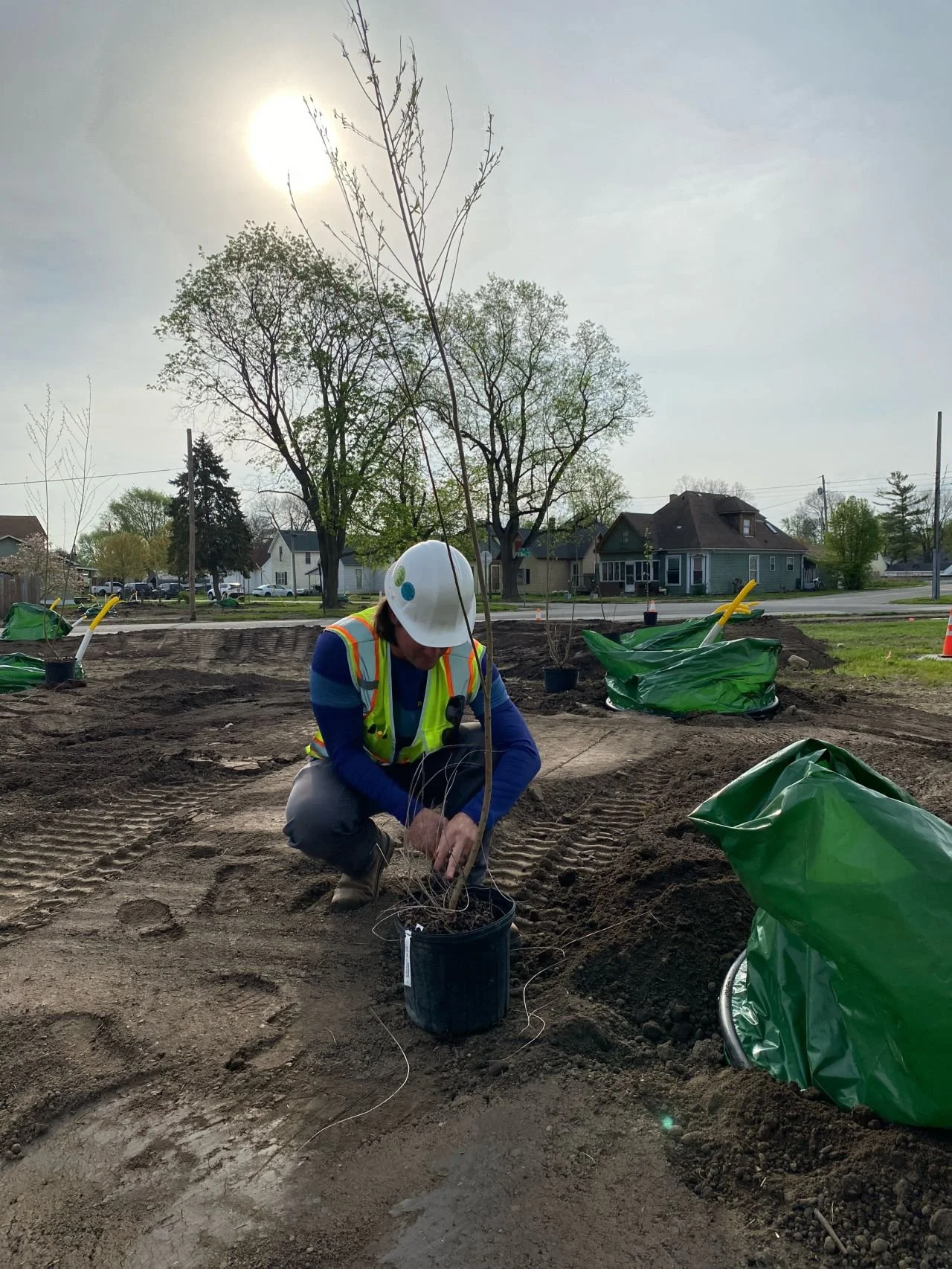
With a client goal of combining remedial function with a visually appealing, park-like setting, this project highlights how the ecological and aesthetic components of phytoremediation can be incorporated into long-term site planning. This Indiana installation uses a TreeWell® phytoremediation system to achieve sustained groundwater capture and treatment along the downgradient plume boundary, while simultaneously establishing a landscape that provides benefits well beyond contaminant mass reduction.
Highlights:
Long-term groundwater control using TreeWell® technology
Nature-based system chosen over more intrusive alternatives
Integrated approach to both remediation and site enhancement
Initial Remedial Focus
The project began with a traditional, performance-driven approach. Early modeling and layout work identified where TreeWell® units needed to be placed to achieve hydraulic containment and contaminant of concern (COC) concentration reduction. Unit spacing, depth, and alignment were optimized to maintain reliable capture across the downgradient boundary. Only after these design requirements were confirmed did the team expand the scope to consider secondary site benefits.
Key Achievements:
Verified hydraulic capture prior to landscape modifications
Optimized placement of TreeWell® units for plume control
Ensured system reliability before expanding the design vision
Integrating Landscape Vision
With hydraulic performance accounted for, the layout was refined to support a more intentional landscape design. Rather than leaving the system as a purely functional installation, onsite vadose-zone soil cuttings were reshaped into defined planter beds surrounding each TreeWell® unit. These features created structure, visual interest, and opportunities for ecological planting throughout the area. Native plants and flowering species were added to these beds, selected to provide seasonal color and support local habitat. As the vegetation matured, the site began to take on the feel of a small park rather than a technical remediation zone.
Enhancement Highlights:
Reused onsite soil to build sculpted planter beds
Introduced native vegetation for color, habitat, and ecological value
Transformed a remedial area into a park-like landscape
Outcomes and Site Transformation
The completed system provides groundwater capture, facilitates contaminant reduction, and reshapes the character of the property. Native vegetation attracts pollinators, improves habitat value, and softens the industrial surroundings of the remedial footprint. The combined effect is a remedy that performs effectively yet feels natural, intentional, and compatible with community-oriented land uses.
Results:
Continued hydraulic containment of the downgradient plume
Sustained contaminant mass reduction via phytoremediation
Significant aesthetic and ecological uplift across the site
Key Insight
This project illustrates that remedial design and landscape design are not competing priorities. When planned together, a phytoremediation system can meet stringent performance goals while simultaneously enhancing aesthetics, ecology, and long-term site value. This Indiana installation stands as an example of how TreeWell® technology can anchor both environmental restoration and thoughtful landscape improvement.
Takeaway:
Intentional landscape integration maximizes the value of nature-based remedies
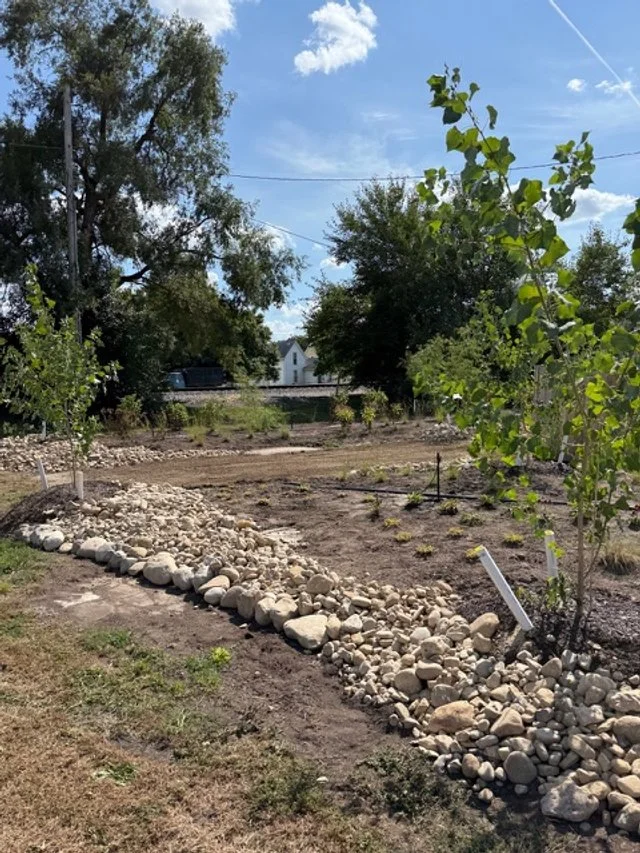
Newly planted trees, shrubs, and grasses in a park-like design